


Worksheet
 Kemi!!_
 Lecture12TheSacredRealm.html.zip
Lecture 12 The Sacred Realm.html
The Sacred Realm:
-
Cosmology & Belief
- similar to sacred art; visualizes and makes real religious or spiritual beliefs, deities, & places of worship
- maps the universe and explains our place in it
- explains existence by attempting to answer who were, were we come from and where we're going.
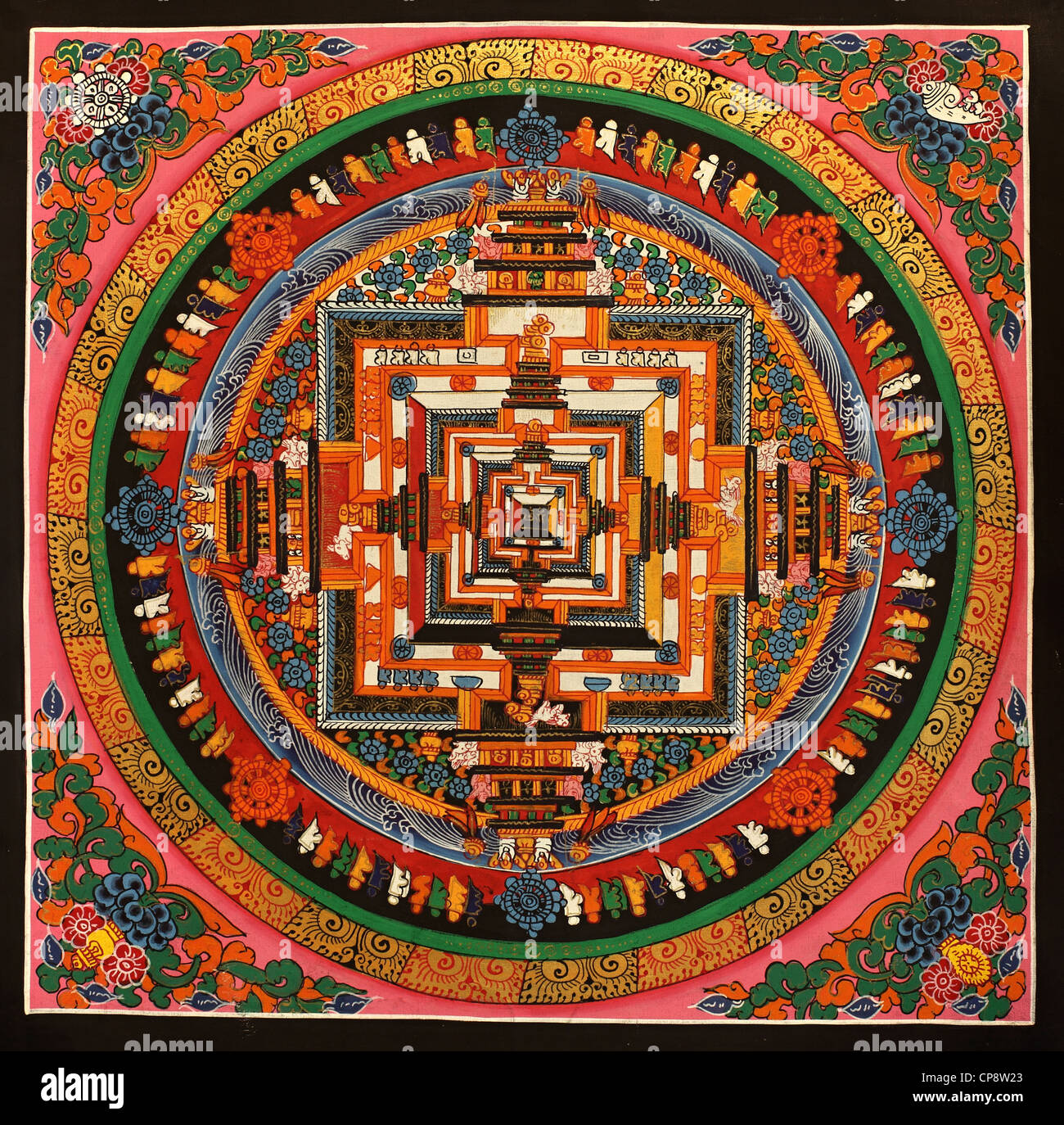
- In the Buddhist tradition, the mandala is a map of the cosmos that depicts a circle (divine/sacred realm) within a square (terrestrial realm). The mandala further serves as a model for temple design, such as the Borobudur Temple in Indonesia. The temple complex is conceived as the body of the Buddha, and each level is decorated with relief carvings of his life that pilgrims meditate on while ascending to the top of the complex.
-



-
Ceremony & Society
- shares similarities with sacred art, but extends to the world of the profane
- may reference Politics and the Social Order
- public spectacles that include masks, costumes & performances, such as Mardi Gras, that also highlight social and racial hierarchies within society
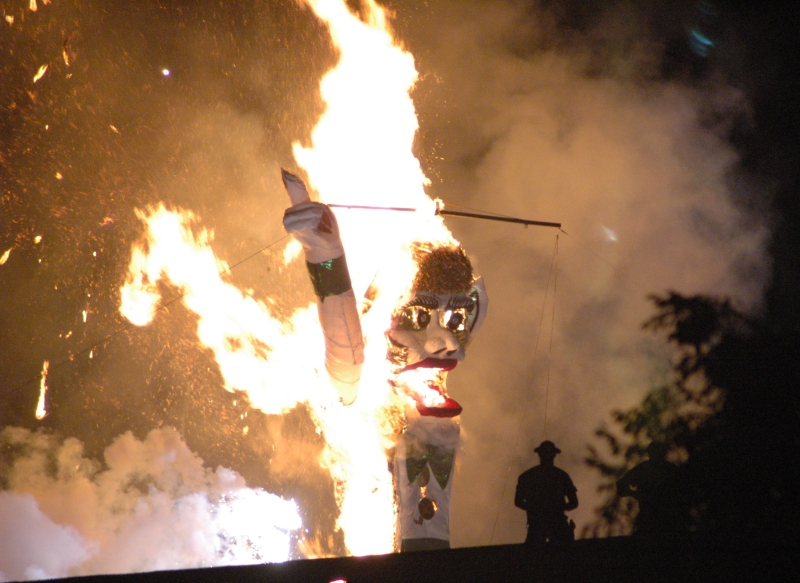
- Dating to 1924, the burning of a 50-ft. marionette, Zozobra (Old Man Gloom), marks the beginning of a three-day Feistas de Santa Fe and represents the destruction of the past year's worries/glooms. In the weeks leading up to the festival, participants are invited to write down their worries and place them in "gloom boxes" which become the stuffing & kindling for the Zozobra. Once burned, individuals begin a new year worry free.
-

-
Death
- Bottom line, we are going to die. But, what happens to us after death? Is there an afterlife? Are we reincarnated? All cultures and religious/spiritual beliefs (The Sacred Realm) attempt to calm our fears about dying and represent those beliefs in artworks that reflect ideologies about mortality and immortality, including funerary art like the Egyptian example below.
-

- Ancient Egypt, Book of the Dead of Hunefer, c. 1275 BCE, ink on papyrus scroll
- Ancient Egyptians lived their entire lives preparing for their death and their resurrection in the Land of Reeds (Paradise/Heaven). Hunefer was a scribe - a relatively high status position - who, while alive, prepared for his imminent death by commissioning a Book of the Dead (a scroll that contained chants and incantations to be recited during his journey through the underworld), collecting charms, constructing a tomb (only elites and royalty could afford), and living a good life. The scene above depicts Hunefer in three different scenes: in the upper left, Hunefer kneels before 14 judges and assures them that his heart is pure; in the lower right, Hunefer is led by Anubis (guide through the underworld) to the final judgement when Hunefer's heart is weighed against the Feather of Ma'at (Ma'at is the god of divine wisdom & judgement). As long as Hunefer's heart does not outweigh the feather, he's brought by Horace to Osiris (god of the Underworld) who welcomes him into the Land of Reeds, where he is reunited with past loved ones and enjoys ever-lasting life.
- Mortality & Immortality
-

- Leonard da Vinci, Mona Lisa, 1503-1506, Oil on wood panel, 30" x 21" Louvre Museum, Paris
- Beyond attempting to answer what happens to us upon death, we may also wonder how (or, if) we'll be remembered - what is our legacy? Portraiture, such Leonardo da Vinci's Mona Lisa, is an example of immortalizing one's self - we die twice = once is our physical death, the second is the last time our name is spoken. If this is true, then Lisa Gherardini del Giocondo remains very much alive.
-


- Damien Hirst, The Physical Impossibility of Death in the Mind of Someone Living, 1991, Glass, painted steel, silicone, monofilament, shark and formaldehyde solution, 85.5" x 213.4" x 70.9"
- Damien Hirst is a contemporary British conceptual artist whose body of work focuses primarily on the theme of mortality/immortality/death. His most shocking & controversial artwork is his 1991 The Physical Impossibility of Death in the Mind of Someone Living in which he suspends a 10-feet long Tiger Shark in a solution of formaldehyde and evokes viewer's fears of shark attack. In doing so, the work further provokes our fear of death, which, as the title states, is physically impossible to comprehend while living. In other words, we know death is imminent, but we cannot understand what death is until we experience it.

