


Worksheet
 Kemi!!_
 Lecture11ReproductionClothingBodyAdornmentClanNuclearFamily.html.zip
Lecture 11 Reproduction, Clothing, Body Adornment, Clan, Nuclear Family.html
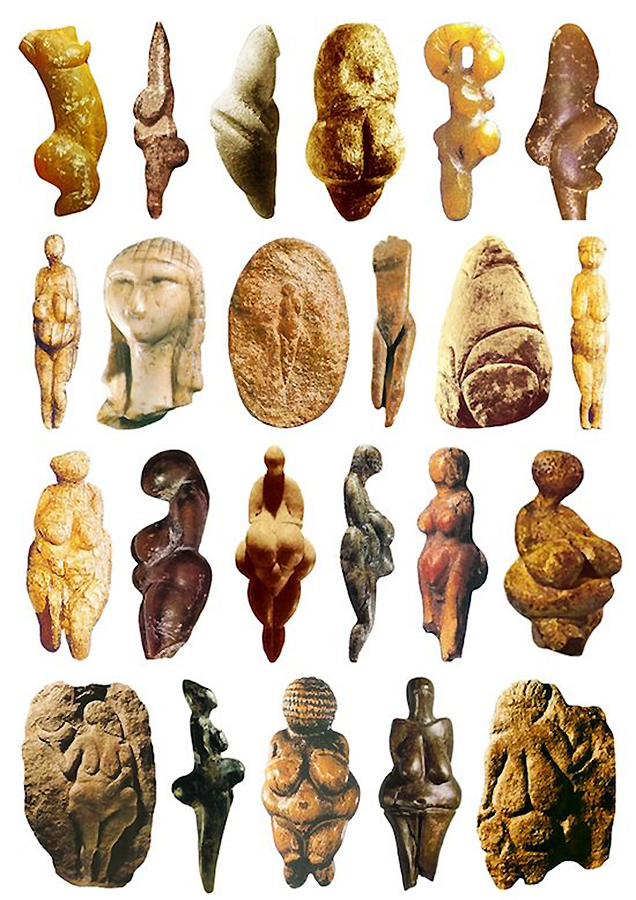
Reproduction is key to human survival and the earliest surviving sculptures focus on this basic human need. The Woman of Willendorf, c. 40,000 BCE, is believed to be a pre-historic fertility idol and many more like it were found throughout northern Europe. The sculptor focused on the female torso and de-emphasized the head (she has no face), arms (they're resting atop her voluminous breasts), and feet (Barbie feet - it was not meant to stand). The sculpture is only 4.5" in height, which infers it was meant to be held and was easily transportable (pre-historic humans were nomadic):



Clothing and body adornment are also important to identifying one's belonging to a group, clan or tribe. The work below is a potlatch hat which depicts clan imagery and the rings on the top represent the number of potlatches hosted by the wearer and, therefore, their prestige and status within society. The hat is decorated with the owners clan (crest) imagery to remind visitors to the potlatch who is hosting the giveaway. Clan, or crest, imagery was derived from oral traditions that explained Haida creation stories as well as honor "an individual’s and group’s link to the wider world in which they live, linking them to creatures or things in the natural environment and to other ... clans and their membership via the demarcation of rank and group identity in the social milieu" (Krutak, 2012).
-
 Nuu-Chah-Nulth, Northwest Coast People, acquired 1780 by Capt. James Cook in the Nootka Sound, cedar root, spruce root, natural pigments, the British Museum
- Marking the body with tattoos was also an important way to convey belonging and status in society amongst the Northwest Coast peoples. Below is an archival photograph dating to c. 1881 in which Haida Chief Xa'na proudly displays his clan imagery: Beaver on his chest, a Grizzly Bear on shoulder, and possibly a Killer Whale on his forearm.
-
 Haida Chief Xa’na of Grizzly Bear House with tattooed hereditary crests, Masset, British Columbia, 1881. Photograph by Edward Dossetter.
What do today's fashions, body adornment, and tattooing say about us today? Or, what are we trying to say to the world?


