


Complete Discussion Post and create two generic responses
 rshem
rshem AbolitionismandtheEnlightenment.html.zip
Units/Unit 4/Abolitionism and the Enlightenment.html
4: The Enlightenment and the Age of Revolution
Introduction
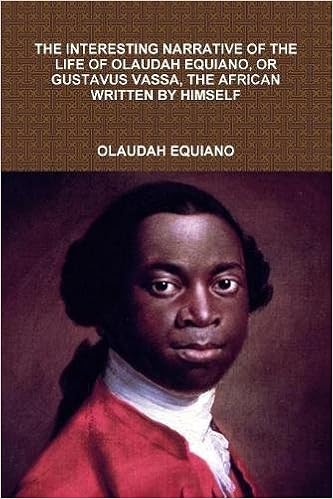 Despite its brutality and inhumanity, the slave system aroused little protest until the 18th century, when rationalist thinkers of the Enlightenment began to criticize it for its violation of the rights of man, and Quaker and other evangelical religious groups condemned it for its un-Christian qualities. Enlightenment figures, such as French philosophers Jean-Jacques Rousseau and Montesquieu, both expressed their disapproval of the Atlantic slave system, as did writers like Aphra Behn, the author of Oroonoko (1688), the story of an African enslaved in Suriname. For the most part, these early critics focused on the inhumanity, cruelty, and immorality of the slave trade, themes that would be picked up by abolitionists in the 1780s. The case against colonial slavery was also greatly strengthened by political economists such as the Scottish economist Adam Smith, who argued that slave labor was costly and inefficient, certainly when compared to free wage labor. Others went further, condemning slavery on the grounds that it was harmful to the personal industry, profitable economy, and family life. Slavery was increasingly viewed by many eighteenth-century Britons (and Americans, too) as part of a "system" that appeared outmoded and in urgent need of repair. An important lead also came from the Religious Society of Friends, known as Quakers. Convinced of the utter sinfulness of physical coercion, American Quaker activists, following Anthony Benezet and John Woolman, succeeded in making abolition a test of religious truth. In 1758, the Philadelphia Yearly Meeting made involvement in the slave trade a disciplinary offense, leading to exclusion from all its business meetings. Two years later Quakers in New England similarly changed their policy relating to slave merchants. Interestingly, there was an international or transatlantic dimension to this reform activity. In 1761 the London Yearly Meeting also announced that any of its members found guilty of involvement in the slave trade would merit disownment. Underpinned by an intricate web of family connections and business contacts, international Quakerism would prove to be one of the most dynamic and enduring factors in the campaign against both slavery and the slave trade. A small group of black abolitionists who formed a group known as the Sons of Africa played a key role in the abolitionist movement. Among them was Olaudah Equiano, of Nigerian origin. An ex-slave who traveled widely and was at one time or another a servant, a hairdresser, a miner, and a ship’s steward, Equiano emerged in his forties as an important spokesman for the early abolitionist movement. He described some of his experiences in his enormously successful Interesting Narrative (1789), which remains probably the most complete account of the enslaved experience in the eighteenth century. Together with Sharp and another free African, Ottobah Cugoano—a Fante from Ghana who had been enslaved in Grenada—Equiano also helped to publicize the 1781 Zong case, in which the British owners of the slave ship Zong attempted to claim insurance on 133 Africans from São Tomé who had been thrown overboard when an epidemic spread.
By the late 18th century, moral disapproval of slavery was widespread, and antislavery reformers won a number of deceptively easy victories during this period. In Britain, Granville Sharp secured a legal decision in 1772 that West Indian planters could not hold slaves in Britain since slavery was contrary to English law. In the United States, all of the states north of Maryland abolished slavery between 1777 and 1804. But antislavery sentiments had little effect on the centers of slavery themselves: the great plantations of the Deep South, the West Indies, and South America. Turning their attention to these areas, British and American abolitionists began working in the late 18th century to prohibit the importation of African slaves into the British colonies and the United States. Under the leadership of William Wilberforce and Thomas Clarkson, these forces succeeded in getting the slave trade to the British colonies abolished in 1807. The United States prohibited the importation of slaves that same year, though widespread smuggling continued until about 1862.

Suppressing the Trade
After the 1807 act, the British no longer participated in the slave-trade but illegal traders continued to smuggle enslaved people to the British West Indies, and to plantations owned by other countries until slavery was abolished. The harsh conditions, in many plantations, meant new African workers were constantly required to replace the dead. Prices rose sharply and huge profits could be made by illegal traders.
For 60 years after the 1807 act, the Royal Navy was used to enforce the British ban by shutting down the slave trade routes and seizing slave ships at sea. The West Africa Squadron patrolled the seas liberating around 150,000 enslaved Africans. The majority of the British Slave Trade was suppressed very rapidly, but as the British ships withdrew from trading the French, followed by the Spanish and Portuguese, took their place.
Gradually the traders were forced southwards down the coast away from the stronghold of Sierra Leone. But there were still many ships that could not be touched because they flew the flags of nations that did not have a treaty with Britain. American ships could not be touched unless there were actually slaves on board. This allowed the traders to arrive on the coast under the American flag, and then switch to the Brazilian flag (under this flag the crew could not be punished if caught). Almost all slavers carried multiple sets of papers to allow them to assume different nationalities as the situation required.
By the end of the 1840s the health and effectiveness of the squadron were improving and in 1850 the Brazilian Chamber of Deputies announced that an earlier treaty with Britain would be enforced. The Brazilian trade rapidly collapsed. The Cuban trade still continued, mainly using American ships; but after Abraham Lincoln became President in 1860, he prevented slave ships being built or fitted out in the northern States. Then in April 1862, the 'Treaty of Washington' between America and Britain finally allowed vessels carrying slavery equipment to be seized along with a mutual right of search.
The American squadron on the coast of Africa was withdrawn, at the onset of the Civil War, leaving the British squadron to act on behalf of both countries. With no protection to be had from any flag, the risks to the slave-traders were rising steeply. Slave-owners were becoming reluctant to invest in slaves and prices were falling.
By 1866 the last of the transatlantic trade had been halted. The transatlantic trade was finally over but trade continued on the east coast of Africa and the Royal Navy continued to police the seas, especially around Zanzibar into the 20th century.

The End of Chattel Slavery in the Americas
The anti-slavery movement depended in part on the success of the movement to end the slave trade. While the two movements shared some of the same people and motivations, bringing an end to slavery proved more difficult than ending the trade. Plantation societies in the Americas provided great wealth to Europe, which some leaders were reluctant to abandon. More stringent ideas about race also made some leaders uncomfortable to accept a large, free population of African descent. Eventually, activist networks on both sides of the Atlantic brought positive legislative change to end the centuries-long practice of enslavement. Historians debate whether this change was due to humanitarian or economic impulses. Some policymakers clearly embraced the rights-based logic of the Enlightenment and revolutions when they voted for emancipation. Others believed that the plantation system was in decline and that states should turn their economic interests elsewhere.
The mechanisms of emancipation varied across the Americas. In Haiti, the enslaved population successfully freed itself from imperial rule. In the United States, a long civil war won a legal end to slavery. In many other places, the process took longer, with governments passing gradual emancipation laws that delayed freedom for many. Emancipation schemes often included some provision for compensating former slave owners. Haiti, for example, was forced to pay France millions in restitution for the loss of slave property. Gradual emancipation and “apprenticeship” policies could also be seen as a form of compensation, where slave owners’ interests were protected above those of their workers. In the end, however, the nineteenth-century Atlantic world saw a dramatic shift, as empires and nations dismantled the formal policies of enslavement.
The end of slavery came to most parts of the Americas in the middle decades of the 1800s. From the 1820s through the 1860s, Great Britain, France, the United States, and independent Spanish American nations outlawed slavery. Haiti stands as a noteworthy exception with its revolutionary emancipation in the first years of the century. Despite growing international pressure, Cuba and Brazil retained their slave systems until the late 1880s.

