


Long Term Planning
 Liz2013
Long Term Planning |
In chapter 7 of your text, although Thematic and PBL units are featured, six other types of instructional units are introduced. For this discussion post, you will perform two tasks.
- Of the eight types of instructional unit introduced in this chapter, choose one, describe it, and tell why it is your preferred choice.
- Using the formatting foe a PBL unit plan provided in table 7.1 in your textbook, outline your own PBL unit.
CHAPTER 7.1
7.1 The Planning Process
Successful educational planning requires an understanding of how to move from the larger instructional context to annualplans, short-term units, and daily lessons. In some schools, teams of specialists and teachers interpret the standards andframeworks into a detailed curriculum for each grade level or subject area. Many districts regularly revise these documents andrequire teachers to use them when planning a timeline for the school year. Understanding the planning process helps to bring asense of coherence to what is taught.
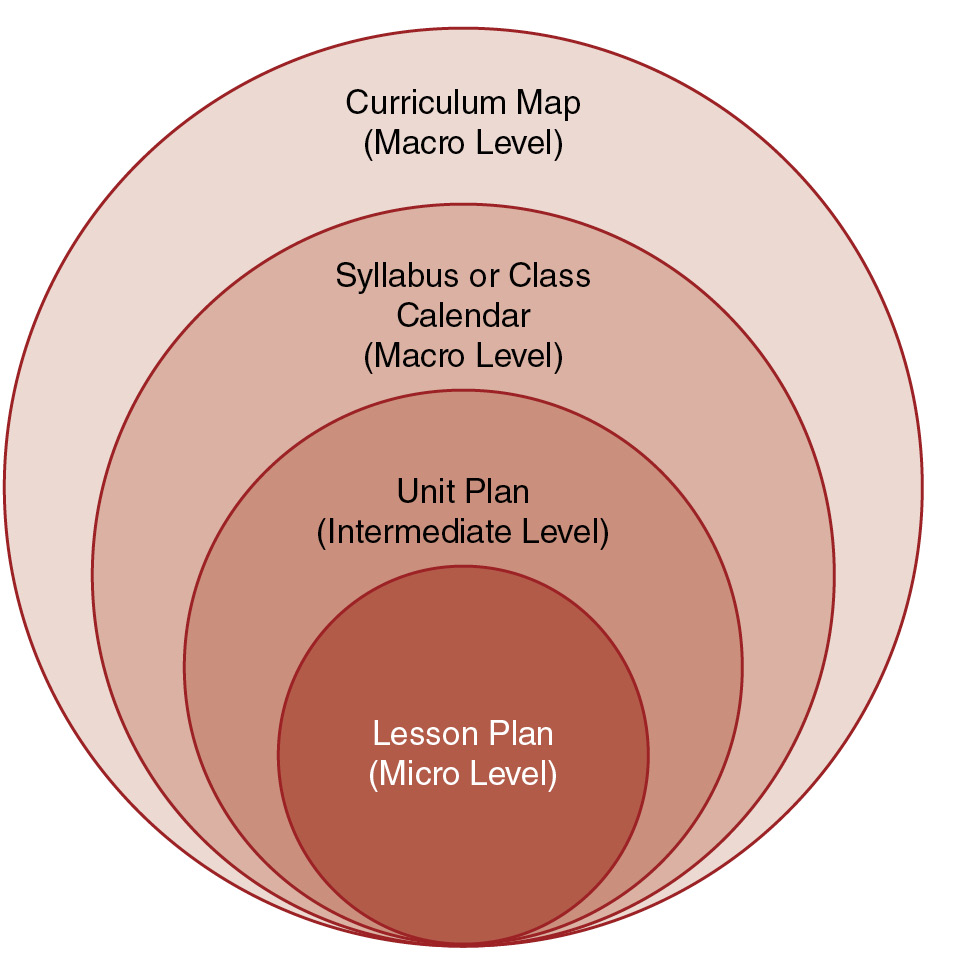
Figure 7.1: Planning relationships:Curriculum map, syllabus, unit plan, andlesson plan
Teachers begin their long-term planning by looking atthe macro, or broad, level first, and they then use thisinformation to make decisions about the intermediate andmicro levels.
Planning Levels
Long-term planning can be considered along a continuum that can bedivided in macro, intermediate, and micro levels. Teachers begin at themacro level by consulting a broad-based view of the year from the schooldistrict’s curriculum documents; then they determine the content for thewhole semester (or year) in the form of a syllabus (secondary grades) orclass calendar (primary grades). Planning then moves on to theintermediate level, planning for topics that are arranged into smallerchunks of time, and, finally, to the micro level, planning for each day. Inthis chapter, the discussion will start at the macro level, to examine howto develop yearly plans, and proceed to the intermediate level. Micro-levelplanning, in the form of daily lesson planning, will be addressed inChapter 8.
Planning Elements
Long-term planning consists of developing an overall syllabus or coursecalendar, a series of units, and sequenced daily lesson plans for each unit.Educators develop a course syllabus at the beginning of the school year. Asyllabus is an overall plan, based on the district’s curriculum map(Chapter 3), that ensures that the content of the curriculum for thegrade/subject is met and all of the appropriate standards are covered.The syllabus serves as a reference for students and parents during theyear. A course syllabus also lays out classroom management policies, whatschool supplies might be required, textbooks, integrity statements, andspecial-learning needs accommodations. Once teachers establish thislong-term plan, they must plan each content area, or topic, in detail. This task is accomplished by developing unit plans. Unitplans are based on skills, standards, themes, or special topics. Unit planning gives teachers a big picture of how the major topicsand specific concepts fit together. Once the unit is planned, daily lesson plans outline each lesson and activities in the unit.Figure 7.1 shows the relationship between these planning documents.
CONSIDER THIS
Why do we need a separate plan for the curriculum map, syllabus, unit, and daily lessons? Wouldn’t one level of planningbe sufficient? Why or why not?
Read from your text, Curriculum and Instruction for the 21st Century:
- Chapter 7: Long-Term Planning
- This chapter discusses the purpose for long-term planning and processes and structures educators can use to organize instruction.
 10 years ago
 5
5

Purchase the answer to view it

 order_22452_long_term_planning.doc

