


discrete math
 pravglad
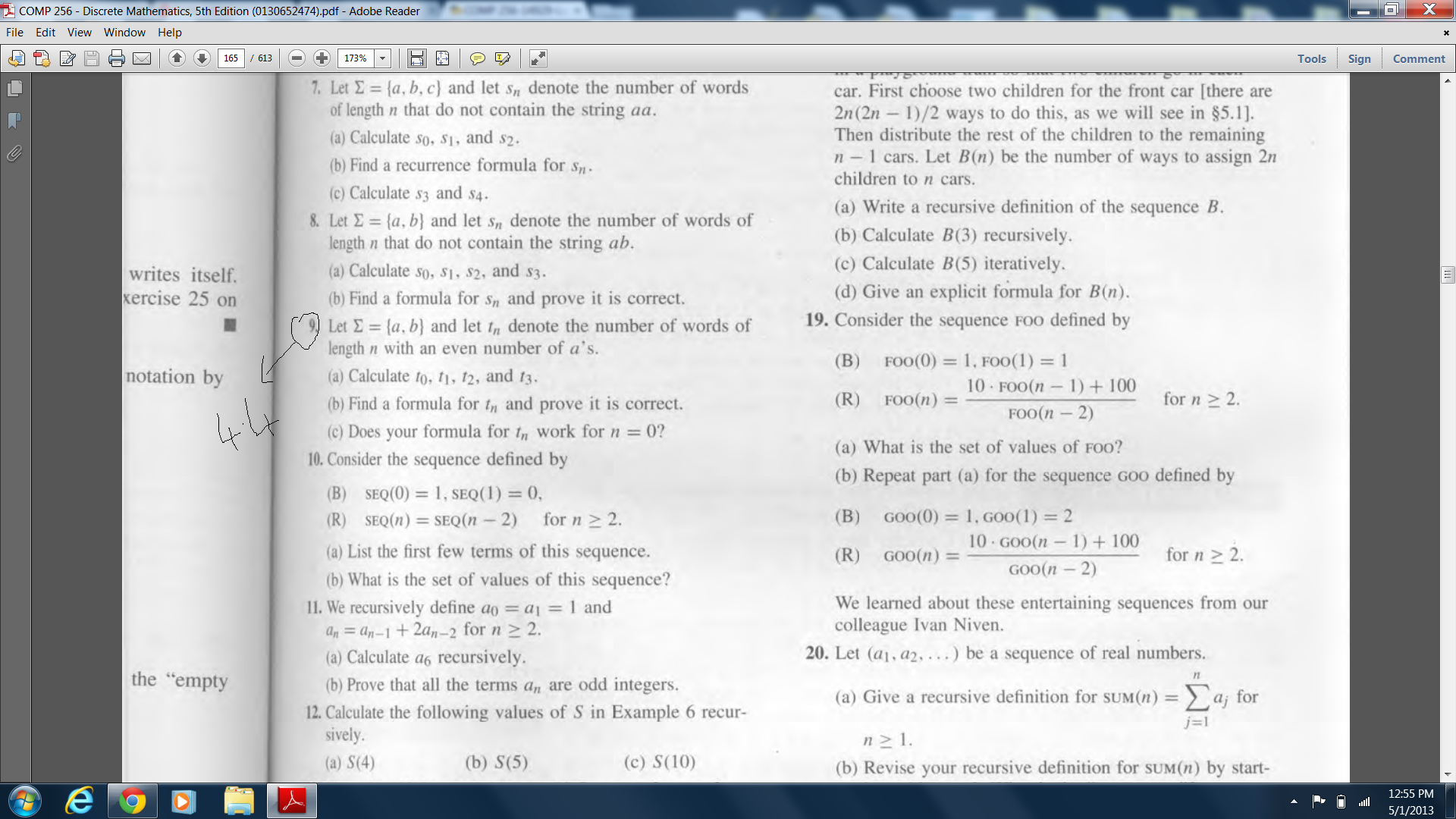
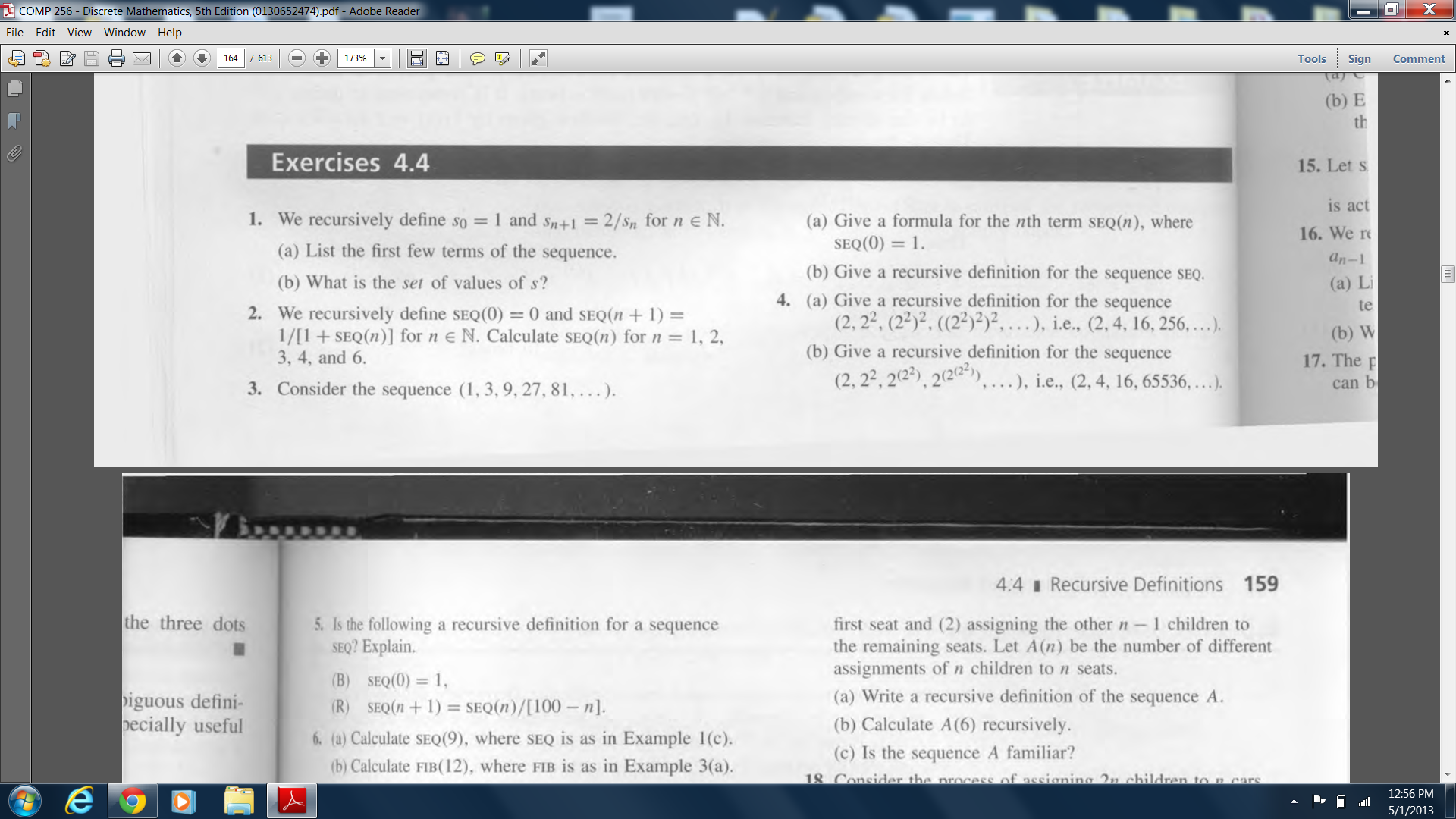
4.4#9 No need to prove part b. Just do a good job explaining it.
Also #1. Define A(1) = 0, A(1) = 1, A(2) = 2, and A(n) = A(n-1) + A(n-2) + A(n-3). Prove by induction that A(n) = O(1.84^n). C=1, k=1 should work.
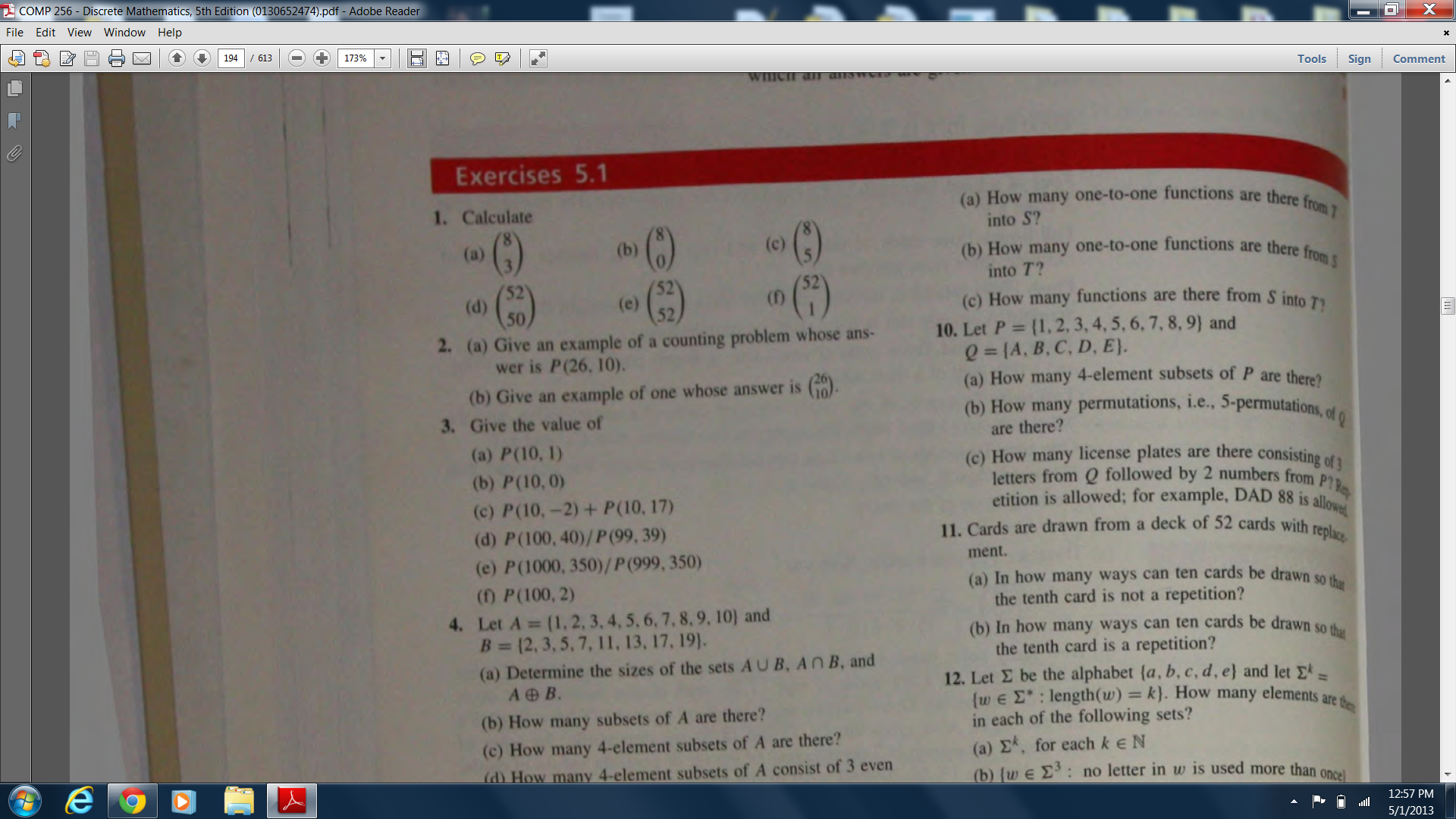
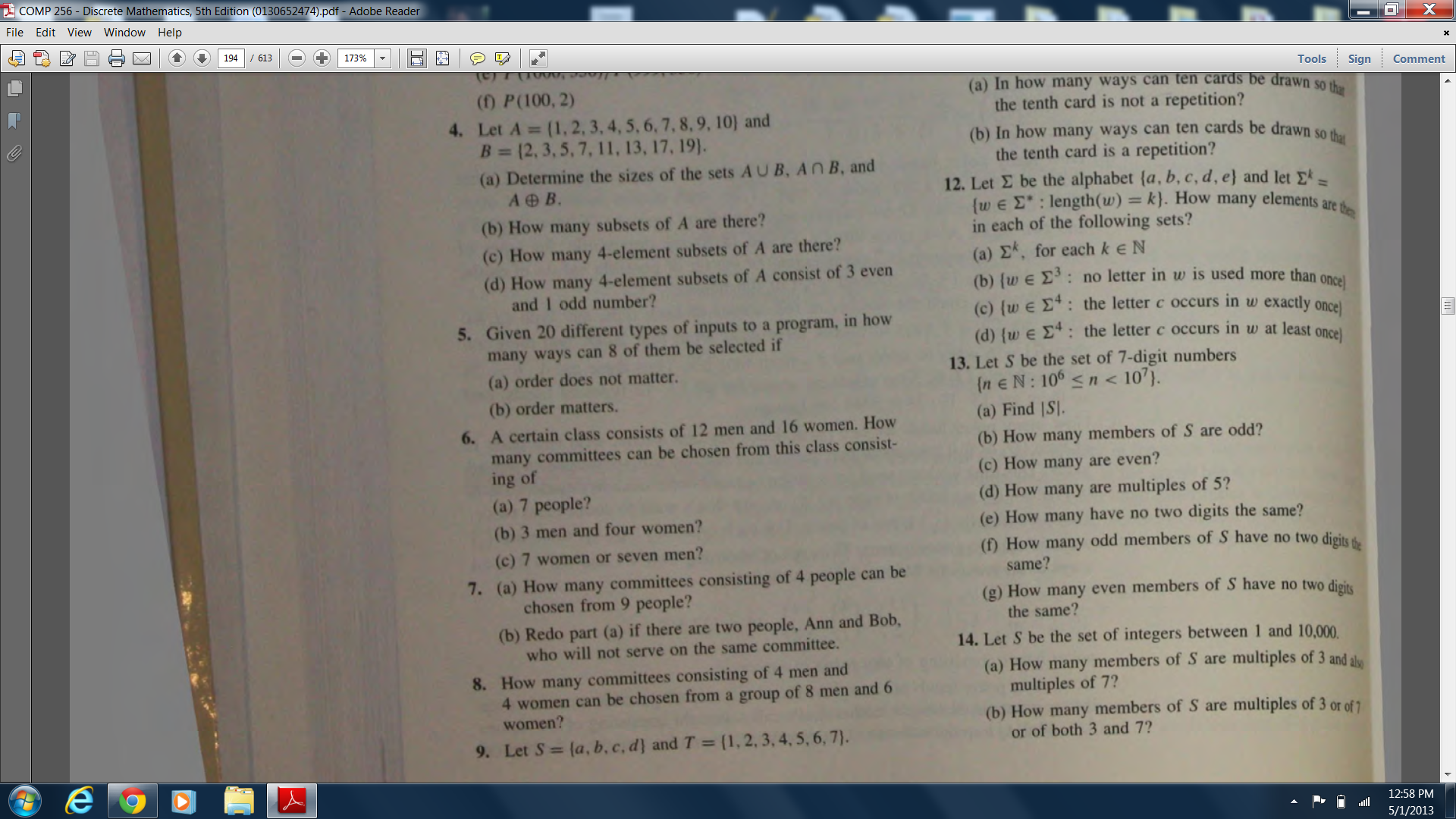
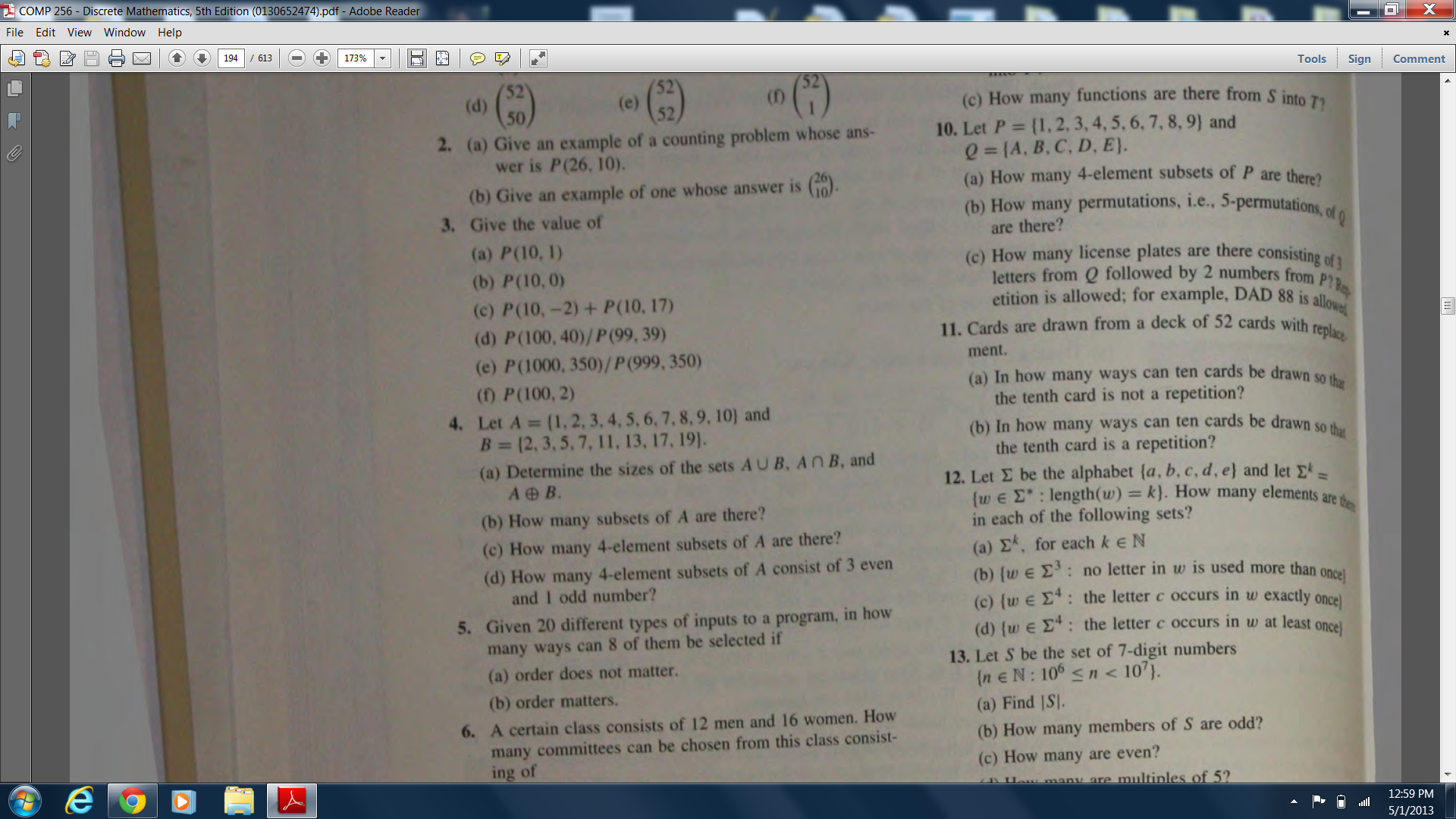
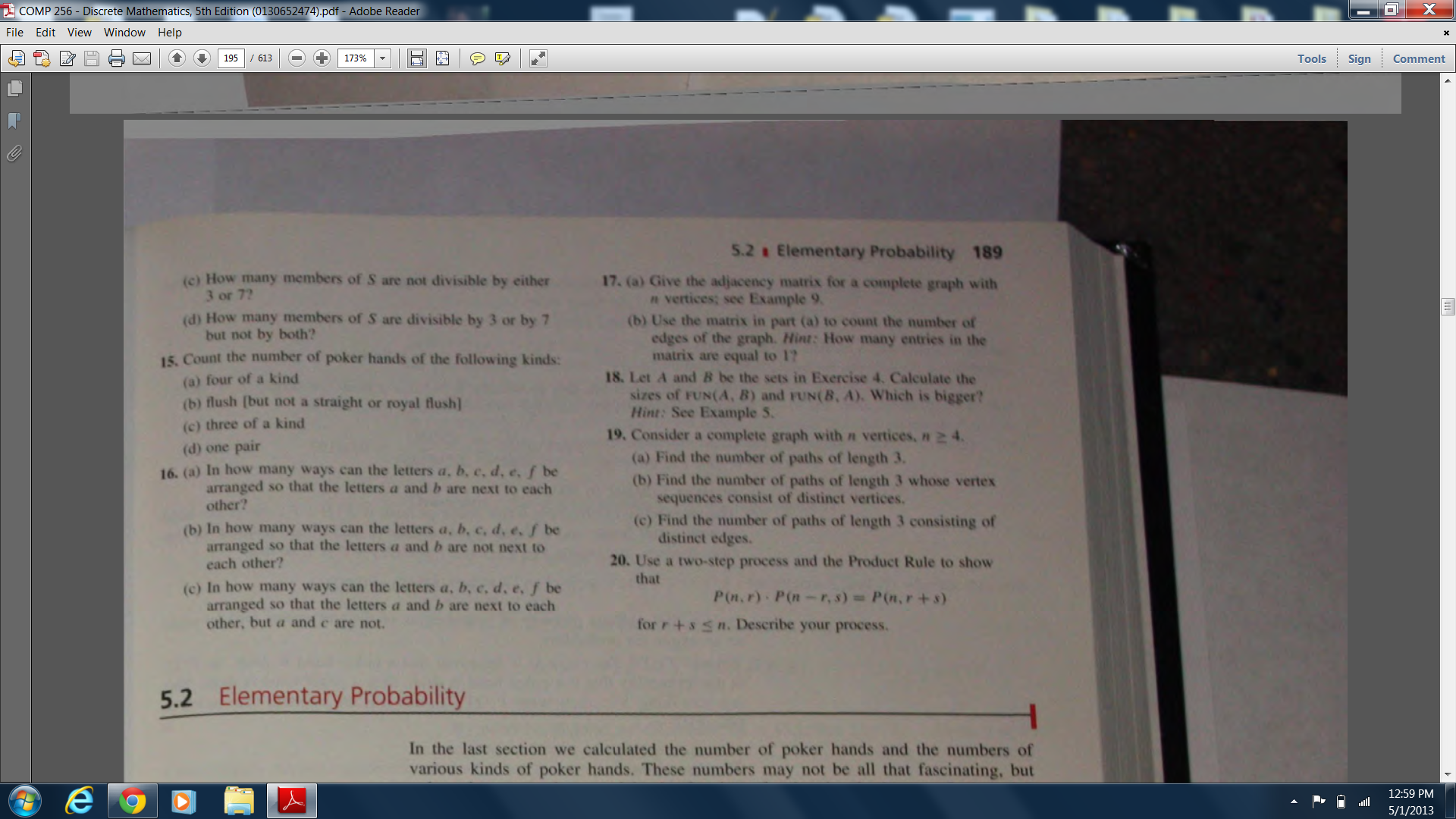
5.1 12, 16
 13 years ago
 20
20
Answer(1)![blurred-text]()
Purchase the answer to view it

NOT RATED
 doc1.docx
Bids(1)
other Questions(10)
- 2-3 pages, why i have an impulsive self
- Maroon 5 (M5), Inc., based in Santa Monica, CA, is a leading producer and marketer of household cleaning products. About...
- Countrywide Cable & Wyalusing Industries
- do anybody have answers to concept development practice page 29-1
- one questions about theory of probability
- History topic - "With Great Moustache Comres Great Responsibility"" - Assess the validity of the statement using the Gilded Age Era.
- operation
- need help over night
- Accounting 14
- i need an expert in phonetics. preferably a person who has a background in communication sciences/disorders or a person who is...

