


Computer Science (computer architecture)
 moldygreenbean
Questions 1, 5, 6, 7, 25.
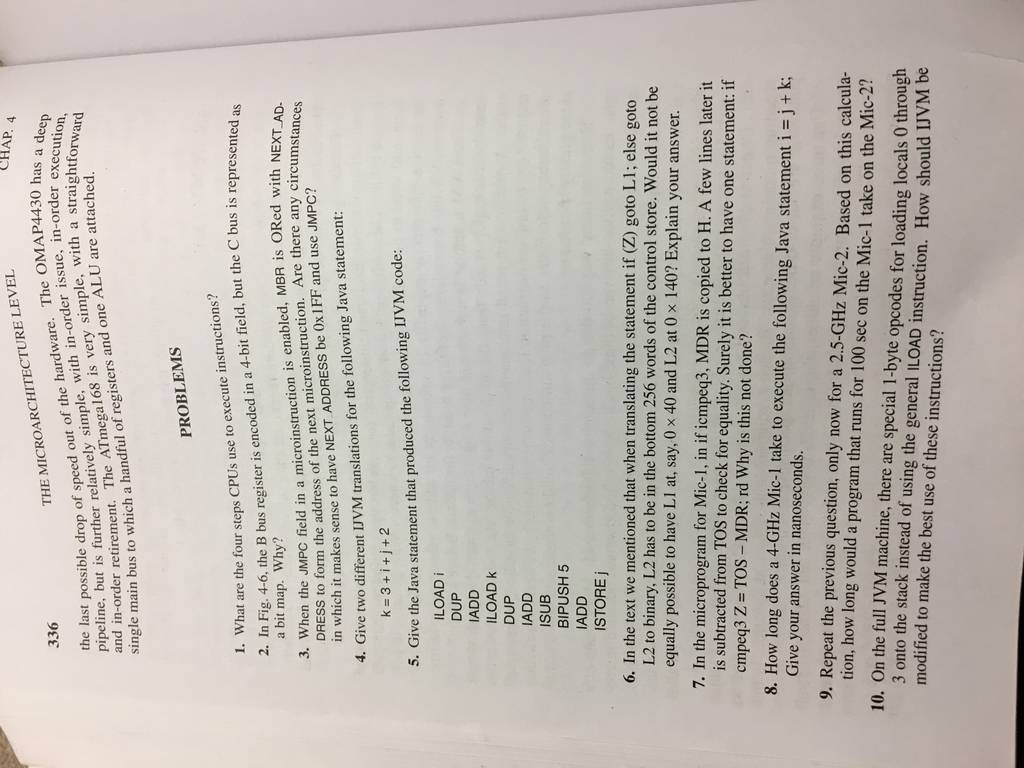
1. What are the four steps CPUs use to execute instructions?
5. Give the java statement that produced the following IJVM code:
ILOAD i
DUP
IADD
ILOAD k
DUP
IADD
ISUB
BIPUSH5
IADD
ISTORE j
6. In the text we mentioned that when translating the statement if (Z) goto L1; else goto L2 to binary, L2 has to be in the bottom 256 words of the control store. Would it not be equally possible to have L1 at, say, 0 x 40 and L2 at 0 x 140? Explain your answer.
7. In the microprogram for Mic-1, in if icmpeg3, MDR is copied to H. A few lines later it is ubtracted from TOD to check for equality. Surely it is better to have one statement: if cmpeq3 Z=TOS - MDR; rd Why is this not done?
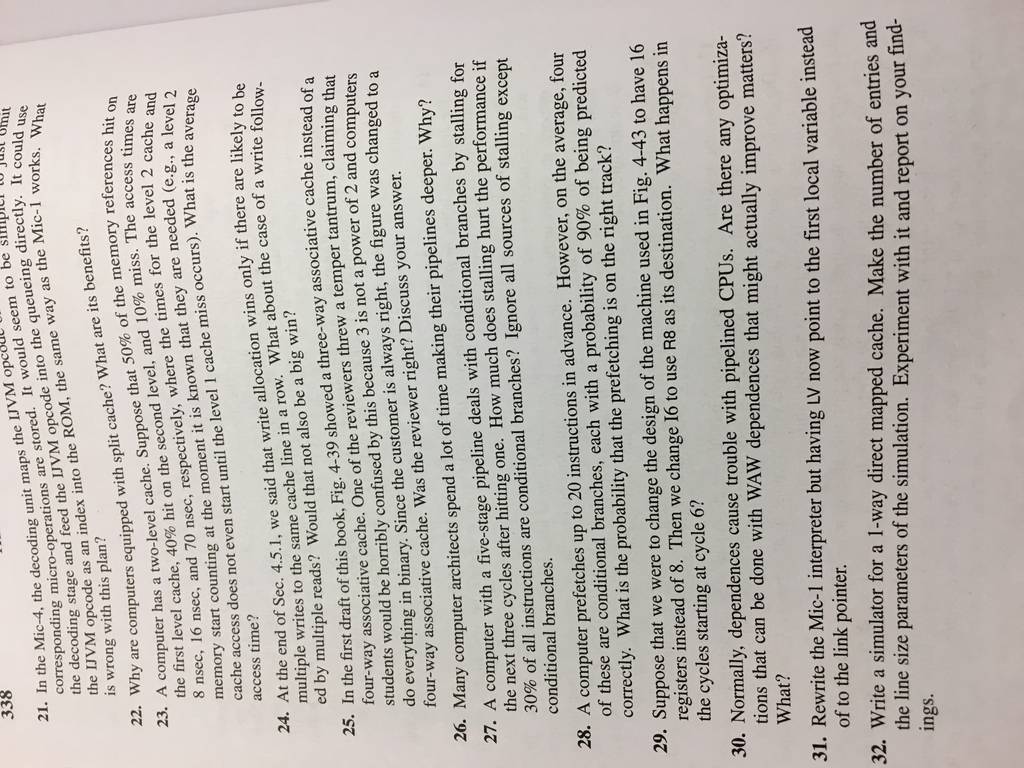
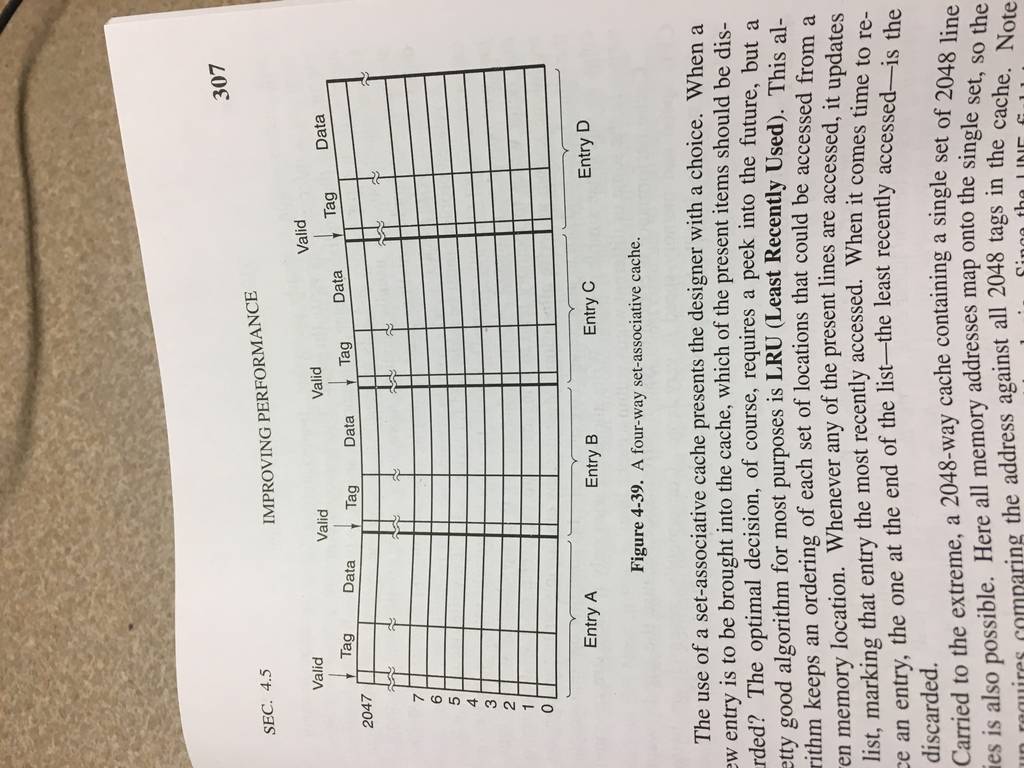
25. In the first draft of this book, Fig. 4-39 showed a three-way associative cache instead of a four-way associative cache. One of the reviewers threw a temper tantrum, claiming that student would be horribly confused by this because 3 is not a power of 2 and computers do everything in binary. Since the customer is always right, the figure was changed to a four-way associative cache. Was the reviewer right? Discuss your answer.
 10 years ago
 15
15
Purchase the answer to view it

 computer_architecture.docx
- crime - for librarysmarts
- BUS 680 Week 1 DQ 2 Learning Theories
- PSY 210 Week 4 Day 5 Effects of stress
- Portfolio Management and Straregy Formulation
- A firm currently uses 40,000 workers to produce 180,000 units of output per day. The daily wage per worker is $100, and the price of the firm's output is $28. The cost of other variable inputs is $500,000 per day. (Note: Assume that output is constant at
- < University of Phoenix LAW 531 - Enterprise Risk Management Plan: Riordan Manufacturing >
- HRM 552 Week 2 Individual Assignment Case Study Analysis
- assignment
- Englsih
- Spanish Lab

